Most B2B marketing plans still treat executive social media as something the CEO handles personally, in between board meetings and funding announcements. It rarely gets a dedicated expert and its own budget.
In today’s new era of B2B buyer Search, AI-powered discovery tools synthesize answers instead of serving up links, and they pull those answers from across the open web. Pew Research found that 88% of AI-generated search summaries cite three or more sources, and only 1% lean on a single one. Most of those sources are not company websites. They are news outlets, industry commentary, community platforms, independent publications, and social media posts, which means the expertise your leadership team shares in public is now a direct input into how AI systems describe your company.
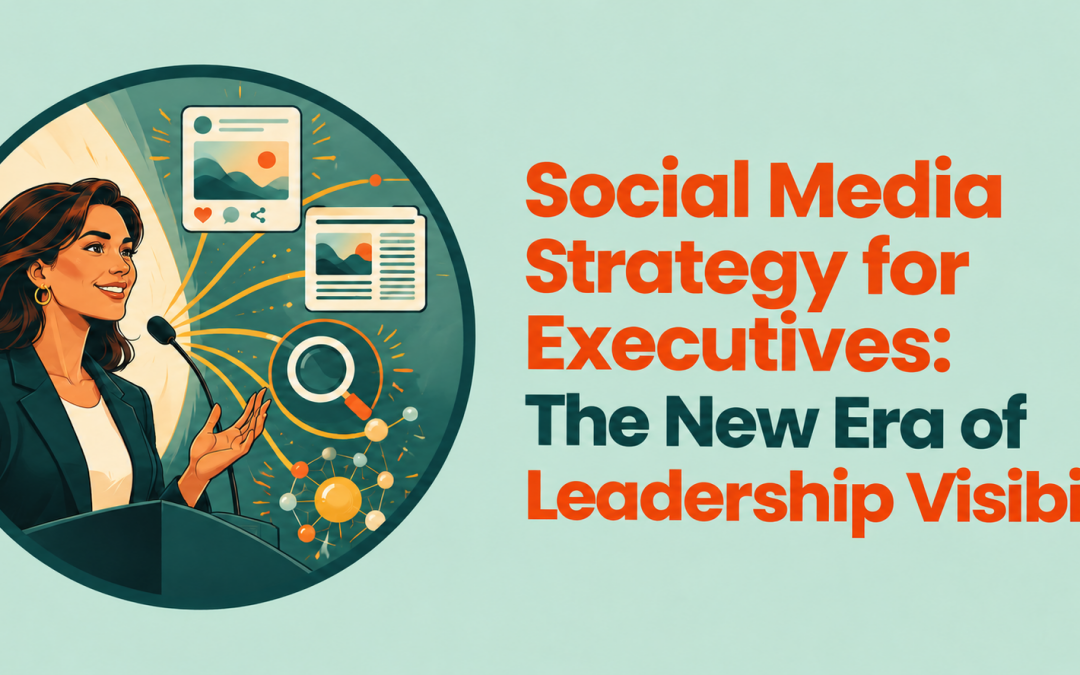
That puts executive commentary in a different category than personal branding. It’s part of your search footprint now, which means a social media strategy for executives deserves the same planning attention as SEO or paid media. This post covers how to build one, and how it strengthens the rest of your program.
Why Thought Leadership on Social Media Carries More Weight Now
Buyers have always trusted people more than logos, but the gap has widened. Business leaders consistently rank among the most trusted institutional voices, often above journalists and public officials, when the topic is their own industry.
Thought leadership can also help move deals forward. 75% of decision-makers say it led them to research a product or service they weren’t previously considering, and 73% say it’s a more trustworthy basis for judging a company’s capabilities than marketing materials (PRDaily).
For B2B teams, executive voices sit in the gap between awareness and consideration.
LinkedIn became the de-facto professional social channel. The platform now has over one billion members, including more than 65 million decision-makers and over 10 million C-level executives. Posts from executives earn roughly 4x the engagement of an average user’s posts (FT). There is no other environment with that concentration of professional influence.
The people with the most credibility in your organization have access to the most concentrated buyer audience in B2B. What they publish today influences the AI models that your prospects are using to research your category.
Where Executives Should Actually Show Up
Most executives don’t need a presence everywhere. Two platforms do the heavy lifting.
LinkedIn (primary)
LinkedIn’s algorithm rewards expertise, relevance, and conversation, so posts that demonstrate real subject matter knowledge and start discussions reach further than polished corporate updates. It’s also increasingly a top citation source in AI search, both posts and LinkedIn Articles. It’s the right home for:
- Commentary on industry trends and market shifts
- Explanations of complex concepts, frameworks, and terminology
- Leadership lessons and company-building perspective
- Company milestones, with a personal point of view attached
X / Twitter (secondary, but high leverage)
X works as a real-time network where journalists, analysts, and investors watch conversations unfold. It favors fast reactions over long-form insight. For executives, it’s useful for:
- Quick perspectives on news and new research
- Direct engagement with reporters and analysts
- Event and conference commentary
- Short threads that break down a technical or strategic idea
Everything else, situationally
Substack or Medium work for long-form POV development. Podcasts and speaking slots are worth chasing too, and they’re often where the highest-value executive content starts, since one recording can supply weeks of posts. Add any of these only if the executive will keep them up.

How Executive Social Media Feeds SEO, GEO, and AI Search
Search engines and AI systems weigh a wide range of signals when deciding which sources to reference, and executive content adds to that pile in places your own domain can’t reach: LinkedIn, X, podcasts, industry publications. (For the fundamentals here, see our guide to boosting brand visibility in AI search results.)
Also, social media for executives reinforces topical authority. When executive commentary covers the same themes as your website content, the two sources corroborate each other. Your blog says the company understands a topic. A named human with a title and a track record says it too, in public, repeatedly. That alignment strengthens how both traditional search and generative engines read your authority on a subject.
Generative Engine Optimization (GEO) depends on being present in the sources models draw from: news coverage, industry publications, community discussion, and social commentary. Executive posts that get quoted, referenced, or picked up by journalists become part of that layer.
Executive social media produces the kind of content formats AI systems prefer to cite. Generative engines favor material that’s clearly written, authoritative, easy to parse, unique, and widely referenced. A good executive post is all four by design. Posts that name a framework, define a term, or take a clear position on a contested question are especially citable, because they give a model something specific and attributable to work with.
The measurement side is still maturing, but the signals are trackable. Our guide on how to measure web traffic from AI covers the referral tracking and citation monitoring worth setting up before you start.
The Multiplier Effect: One Channel That Lifts the Rest
Executive social media is one of the better examples of Multiplier Marketing at work. The engagement it generates on its own is fine. The more interesting returns show up in the channels around it.
Executive social + PR.
An executive with an established point of view is an easier sell to a journalist than one with no public track record, and reporters do check LinkedIn before agreeing to a briefing. A leader who has been commenting intelligently on a beat for six months is a credible source. Coverage then gets amplified back through the executive’s own channels, with added perspective.
Executive social + SEO/GEO.
Keyword and topic research should inform executive content themes, not just blog calendars. If your SEO strategy is building authority around a cluster of terms, executive posts on those same themes add off-site reinforcement that your domain can’t generate alone.
Executive social + corporate channels.
Company pages are built for announcements, which is why the same launch performs differently when a leader explains why it matters. It also reaches an audience beyond the brand page.
Executive social + paid.
An executive post that already earned engagement organically is a cheaper starting point for paid than untested creative, and it works well against account-based advertising target lists. Prospects that discover your brand through paid and gain more trust through executive social proof are more likely to convert.
Executive social + demand gen.
Sales teams working named accounts get a real assist when the CEO’s perspective is already circulating in the buying committee’s feed, and buyers who recognize the name arrive with fewer questions about who you are.
These connections need planning. They show up when the same team works across channels instead of handing off between three agencies, which is the argument for running this as one program.
What an Executive Social Media Strategy Includes
- Voice and positioning. Before anything gets published, define what this executive is known for: their positioning statement, three to five core themes, their genuine points of view, and how their voice differs from peers in the category.
- Content themes and an editorial calendar. Rather than inventing something new every week, build a set of repeatable formats the executive can return to:
- Industry insight — where the market is heading and why
- Explaining complex ideas — the format that performs best, because it educates while demonstrating expertise
- Leadership lessons — the posts that build actual human connection
- Milestones with perspective — company news plus the reason it matters
Balance these so the account stays useful rather than promotional. Video works well for the same themes, especially short, unpolished takes rather than produced presentations.
- Ghostwriting and content creation. Drafts written in the executive’s voice, reviewed and approved by them. This is where social media management and content creation services earn their keep: the executive contributes thinking, not production time.
- A publishing cadence. Consistency drives visibility more than any single post. A workable baseline is one to three LinkedIn posts per week and two to four on X, with ongoing engagement in between.
- Engagement, not just publishing. Thoughtful comments on peer, analyst, and customer posts expand reach faster than broadcasting alone. Identify the conversations worth joining, and then show up in them.
- Listening and monitoring. Programs need social listening to find timely conversations, track how the executive’s themes are landing, and catch problems early. Social media threat monitoring for executives matters more as leadership profiles grow: impersonation accounts, coordinated criticism, and misattributed quotes are real risks for visible leaders in AI and B2B tech.
- Measurement. Engagement metrics (impressions, reactions, comments, shares) show whether content resonates. Audience growth within the target industry shows whether it’s reaching the right people. Influence indicators (peer mentions, analyst engagement, speaking invitations, podcast requests) show whether authority is compounding. And brand mention volume and AI citation tracking connect the program back to search and GEO performance.
Where Executive Programs Go Wrong
A few failure patterns show up repeatedly:
- Corporate voice in a personal account. If the post could have been published by the company page, it shouldn’t come from the executive.
- Publishing without engaging. Broadcasting into the void is half a program.
- Inconsistent cadence. Six posts in a launch week followed by two quiet months builds nothing.
- No connection to the marketing plan. Executive themes that don’t align with SEO/GEO topics or PR narratives waste the multiplier entirely.
- Too much executive time. Any program that demands hours a week from a CEO will die. Structure it so participation is a monthly strategy conversation, occasional voice notes, and quick approvals.
Final Thoughts: Executive Visibility Is Now Part of Search
Executive social media used to be a personal branding exercise. It’s now part of how buyers, investors, analysts, journalists, and AI systems build a picture of your company, and the companies whose leaders publish consistently are the ones that get quoted and cited.
The upside is that this is one of the few channels where the raw material already exists. Your executives have the expertise. The work is turning it into a consistent, strategic presence and connecting it to everything else in the program.
If you’re weighing what an executive social media strategy should look like for your leadership team, Firebrand builds executive programs that connect to PR, SEO/GEO, and paid media so the visibility compounds instead of sitting in a silo.
Social Media Strategy for Executives FAQs
What is a social media strategy for executives?
A social media strategy for executives is a structured plan for how a company’s leaders build and maintain a credible public presence, usually on LinkedIn and X. It defines what each executive is known for, the themes they’ll speak to, how often they’ll publish, which conversations they’ll join, and how performance is measured.
It differs from corporate social media in purpose. Company channels distribute announcements and campaigns. Executive channels contribute expertise and perspective from a named human, which carries more trust with buyers and more weight with search and AI systems. A complete program typically covers voice and positioning, an editorial calendar, ghostwriting, engagement support, monitoring, and reporting.
Which social media platforms are best for executives?
LinkedIn is the primary platform for nearly every B2B executive. With over a billion members and more than 65 million decision-makers, it’s the most concentrated professional audience available, and its algorithm rewards posts that demonstrate expertise and generate discussion.
X/Twitter is the strongest secondary platform, particularly for executives in technology, AI, and data categories where journalists, analysts, and investors follow conversations in real time. Substack or Medium can be worth adding for leaders who genuinely want to write long-form, and podcast appearances are often the highest-leverage content source of all, since one recording can supply weeks of posts. Start with one platform done consistently rather than four done occasionally.
How does executive social media support SEO and GEO?
Executive content expands the amount of credible, attributable expertise associated with your company across the web, which is exactly what generative engines evaluate when deciding which sources to cite. With 88% of AI-generated summaries citing three or more sources, and a large share of those sources being third-party rather than company-owned, content published under an executive’s name reaches places your domain can’t.
Consistency across sources matters too. When executive commentary covers the same themes as your website content, the two back each other up and strengthen how both traditional search and AI systems assess your expertise on those topics. Posts that define terms, introduce frameworks, or take clear positions are the most citable, because they give models structured, attributable material to synthesize.
How much time does an executive social media program require from a CEO?
A well-structured program asks for a 30 to 45 minute monthly strategy conversation, occasional voice notes or bullet points when the executive reacts to industry news, and quick review and approval of drafted posts. Most executives expect it to cost them more time than it does.
Everything else (topic identification, drafting, scheduling, engagement research, reporting) sits with the agency or internal team. The executive supplies the thinking and the judgment; the program supplies the production. Ghostwriting is standard practice at this level and doesn’t compromise authenticity as long as drafts genuinely reflect the executive’s voice and they review before anything is published.
How do you measure the success of an executive social media program?
Measurement generally works across four layers:
- Engagement metrics (impressions, reactions, comments, shares) show whether the content resonates.
- Audience growth, especially within target industries and job titles, shows whether it’s reaching the right people.
- Influence indicators (mentions by peers, engagement from analysts and journalists, speaking and podcast invitations) show whether industry authority is building.
- The fourth layer connects to Search. Track brand mention volume across the web, referral traffic from AI platforms in GA4, and citation presence in AI search tools. These signals take longer to move than engagement metrics, but they’re the ones that tie executive visibility back to pipeline and discoverability.
Whether you need a voice and positioning strategy for one founder or a full program across the leadership team, let’s talk about what that looks like.
About the Author

Shane Jordan is a San Francisco-based digital marketing pro with a passion for driving brand growth. At Firebrand, Shane focuses on client growth strategies including SEO & Generative Engine Optimization (GEO), PPC, organic & paid social media, Influencer marketing and performance analytics. He writes practical guides on digital marketing topics including SEO Best Practices, PPC Landing Pages, Multiplier Marketing, and Measuring AI Web Traffic.
With a seasoned background and a passion for emerging tech, Shane helps brands navigate the future of marketing. Outside of work, he enjoys coastal hikes with his family and piloting small aircraft.
Follow Shane on LinkedIn or explore more on Firebrand’s startup marketing agency blog.