The click is dying. And if you’re a marketer, that likely brings a wave of anxiety.
For decades, the click was our north star, proof that our content worked, our messaging resonated, our strategy succeeded. We obsessed over click-through rates, celebrated traffic spikes, and built entire attribution models around that satisfying moment when someone left a platform and landed on our website.
Your audience is still out there, but their behaviors are changing fast. They’re still discovering your brand, forming opinions about your products, and making purchasing decisions. They’re just doing it without clicking through to your site.
Welcome to the era of zero-click marketing, where influence happens before attribution, where brand building occurs in feeds and AI-generated answers, and where the most successful marketers have stopped treating every platform like a traffic funnel and started delivering real value exactly where their audience already is.
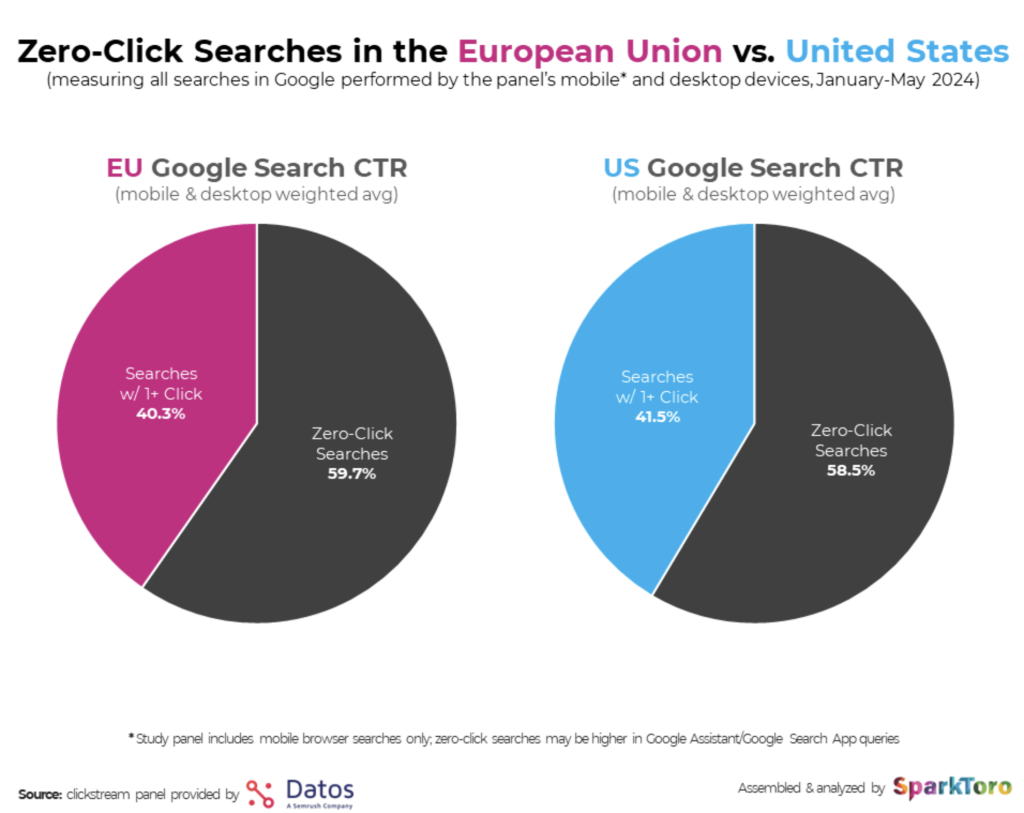
What is Zero-Click?
Zero-click definition: Zero-click is when users get the information they need without clicking through to another site, whether it’s an AI answer in Google, a social post that teaches inline, or a short YouTube video that solves the problem on-platform.
What is Zero-Click Marketing?
Zero-click marketing is the strategic practice of creating standalone value on the platforms where your audience already spends their time, without depending on clicks to your website to measure success.
It’s a fundamental mindset shift. Instead of treating every piece of content as a teaser designed to extract traffic, zero-click marketing delivers complete, genuinely useful information in-platform. You’re educating in LinkedIn carousels, solving problems in YouTube videos, answering questions comprehensively in Reddit threads, and ensuring your brand appears in AI-generated answers, all while building awareness, affinity, and influence.
This doesn’t mean abandoning your website or giving up on traffic entirely. It means recognizing that influence has always been more valuable than vanity metrics. When your content helps 10,000 people on LinkedIn versus driving 1,000 clicks to your blog, you haven’t lost — you’ve reached 10 times more people who now know your brand, trust your expertise, and will remember you when they’re ready to buy.
The brands winning in 2026 aren’t the ones desperately trying to reverse this trend. They’re the ones leaning into it, reshaping their content strategies, redefining their success metrics, and building competitive advantages in a zero-click world. Read on for five specific, actionable tactics you can deploy right now to turn this shift into a strategic advantage.
1. Optimize for GEO (Generative Engine Optimization) – Make Your Brand AI-Visible
SEO is about getting your website to rank in search results; GEO is about getting your brand mentioned in AI-generated answers. As ChatGPT, Perplexity, Google’s AI Overviews, and other large language models become primary discovery tools, your content needs to be structured so AI systems can understand, trust, and cite it. This means going beyond traditional keyword optimization to focus on semantic clarity, comprehensive FAQs, structured data markup (like schema.org), and content that directly answers questions in a way that mirrors natural language patterns.
The difference between SEO and GEO comes down to intent resolution. Traditional SEO content often spreads information across multiple pages to capture long-tail keywords. GEO content resolves intent completely within a single piece, anticipating follow-up questions and providing authoritative, well-structured answers that AI can confidently surface. Implement FAQ sections with proper schema markup, use clear headings that map to common queries, define concepts explicitly rather than assuming context, and organize information hierarchically so models can parse relationships between ideas.
When AI tools generate answers in your space and your brand isn’t mentioned, you’re invisible to an increasingly large segment of potential buyers.
2. Own Your Narrative with Branded Search Ads
In a zero-click world, branded search ads aren’t just about capturing demand, they’re about controlling your story when you have someone’s attention, even if they never click. When prospects search for your brand name, competitors, or category terms, the ad copy itself becomes prime real estate for messaging. You can shape perceptions, highlight differentiators, address objections, and position your brand exactly how you want, all within the ad text that appears, whether or not someone clicks through. Think of these ads as micro-billboards that reinforce your value proposition at the precise moment someone is evaluating you.
3. Build Authority Through Thought Leadership & Media Relations (Without Asking for Links)
Publications, podcasts, newsletters, and industry influencers are far more receptive to your pitches when you’re not asking for a link. After decades of being bombarded by SEO-driven link requests, editors and content creators have developed an allergic reaction to anything that smells like link building. But when you approach them with genuine expertise, original research, timely commentary, or a fresh perspective, doors open.
This shift in approach transforms media relations from a transactional link-building exercise into a strategic brand-building channel where the goal is visibility, credibility, and positioning as a trusted authority in your space. And here’s why this matters more than ever: our experience shows that 85% or more of AI search citations come from third-party sites rather than brand-owned properties. If you want to appear in AI-generated answers, you need your brand mentioned in the authoritative external sources that LLMs trust and reference.
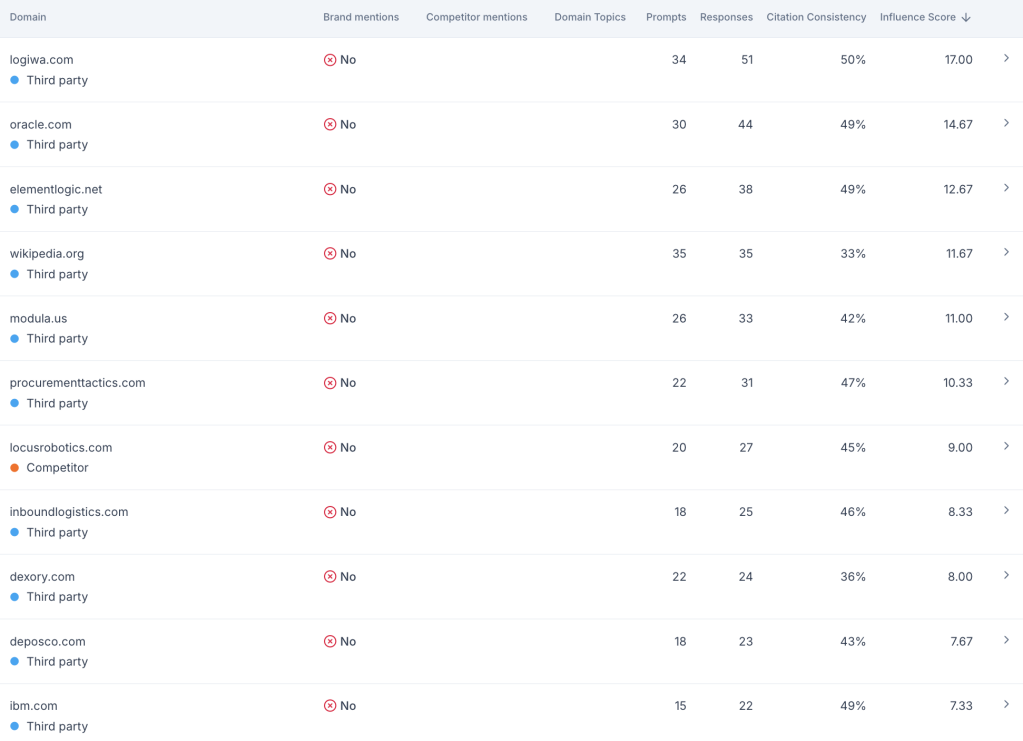
Example of third party citation sources in AI Search
Focus on creating placement opportunities that build recognition and influence: contributing bylined articles to industry publications, offering expert quotes for trending stories, releasing original research that others will naturally reference, and appearing on podcasts where deep conversations showcase your expertise. The value isn’t just in the referral traffic these placements might generate but in the repeated exposure, the third-party validation, and the mental availability you build when your name consistently appears alongside the topics that matter to your audience. When buyers are ready to make a decision, they’ll remember the brand they’ve seen positioned as the expert across multiple trusted sources.
4. Create Comprehensive Video Content That Lives Everywhere
Video has become the most powerful format for zero-click marketing because it delivers complete value without requiring users to leave the platform where they discovered it. YouTube remains the second-largest search engine in the world, and comprehensive, educational videos in your niche establish authority while serving as evergreen assets that continue generating brand awareness long after publication.
The key is creating videos that thoroughly address topics your audience cares about, not 60-second teasers designed to drive traffic elsewhere, but 8-15 minute deep dives that actually solve problems, explain concepts, and showcase your expertise. And here’s the game-changer: AI tools have dramatically reduced the cost and complexity of producing high-quality video at scale, making it feasible to build a comprehensive video library covering your entire domain of expertise.
But don’t let that content live only on YouTube. Repurpose these videos strategically across social platforms where video drives dramatically higher engagement than static posts. LinkedIn native video, Instagram Reels, TikTok, and Facebook video all reward video content with greater algorithmic reach, and none of them require or even encourage external links. Each piece should provide genuine value on its own while subtly reinforcing your brand’s expertise and perspective. When someone scrolls past your video and learns something useful in 45 seconds, you’ve created a strong zero-click marketing tactic: they didn’t visit your website, but they now know who you are and what you know.
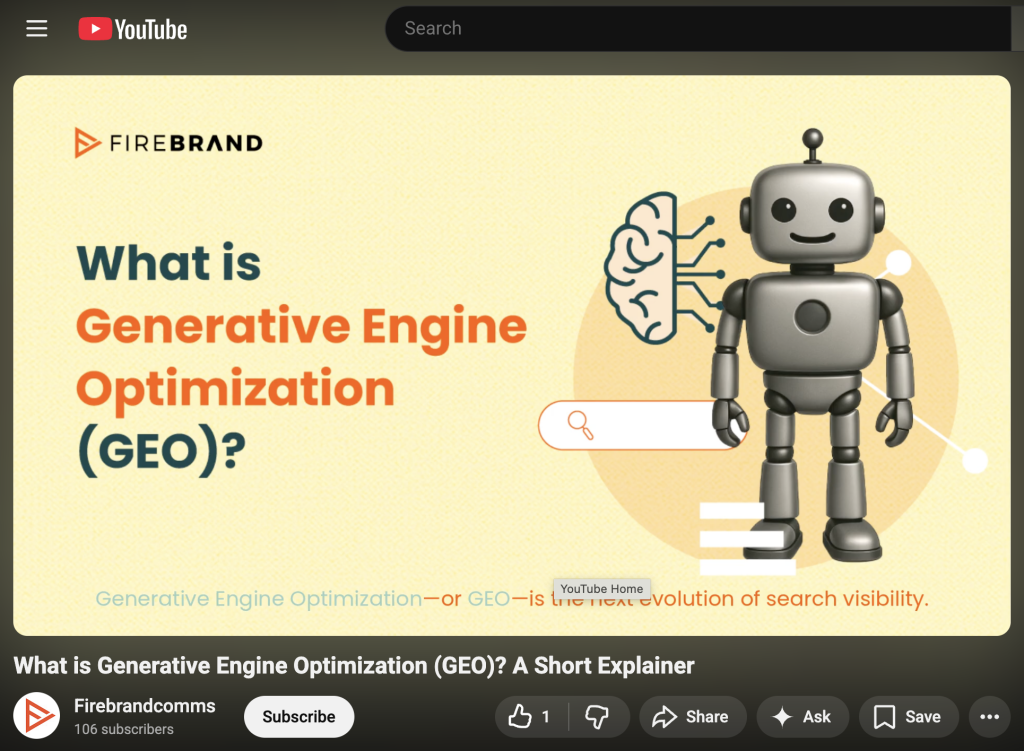
Example of AI-assisted video creation for zero-click marketing on YouTube
5. Show Up Where Conversations Happen – And Add Real Value
Social media and online communities have become the primary spaces where your audience asks questions, seeks recommendations, and forms opinions about brands — and the most successful zero-click marketers meet them there with genuine expertise, not thinly veiled sales pitches. This means actively participating in Reddit threads, Quora discussions, industry-specific Slack channels, Discord communities, and LinkedIn comment sections where your ideal customers are already gathering.
The goal isn’t to drop links or pitch your product; it’s to be genuinely helpful, demonstrate deep subject matter knowledge, and build recognition as someone who contributes real value. When you consistently show up with thoughtful answers and authentic engagement, you create mental availability that pays dividends when those same community members are later evaluating solutions in your category.
On platforms like LinkedIn and Instagram, this strategy extends to creating native content formats that tell complete stories without ever asking for a click. LinkedIn carousels that break down complex concepts, Instagram infographics that visualize data insights, and LinkedIn newsletters that deliver analysis directly in the feed maximize reach because algorithms reward content that keeps users engaged on-platform. Research from SparkToro demonstrates this dramatically: zero-click content (posts without links) generates approximately 10 times the reach compared to posts containing links. Pair this organic approach with a modest boosting budget to extend your reach beyond your existing followers, and encourage employees and founders to share and engage with this content from their personal accounts. Employee-led and founder-led content consistently generates 5-10x more engagement than corporate posts because it feels more authentic and trustworthy. The combination of showing up in real conversations and creating platform-native content that delivers immediate value builds the kind of distributed brand presence that no single website could ever achieve.
Redefining Success: How to Measure What Matters in a Zero-Click World
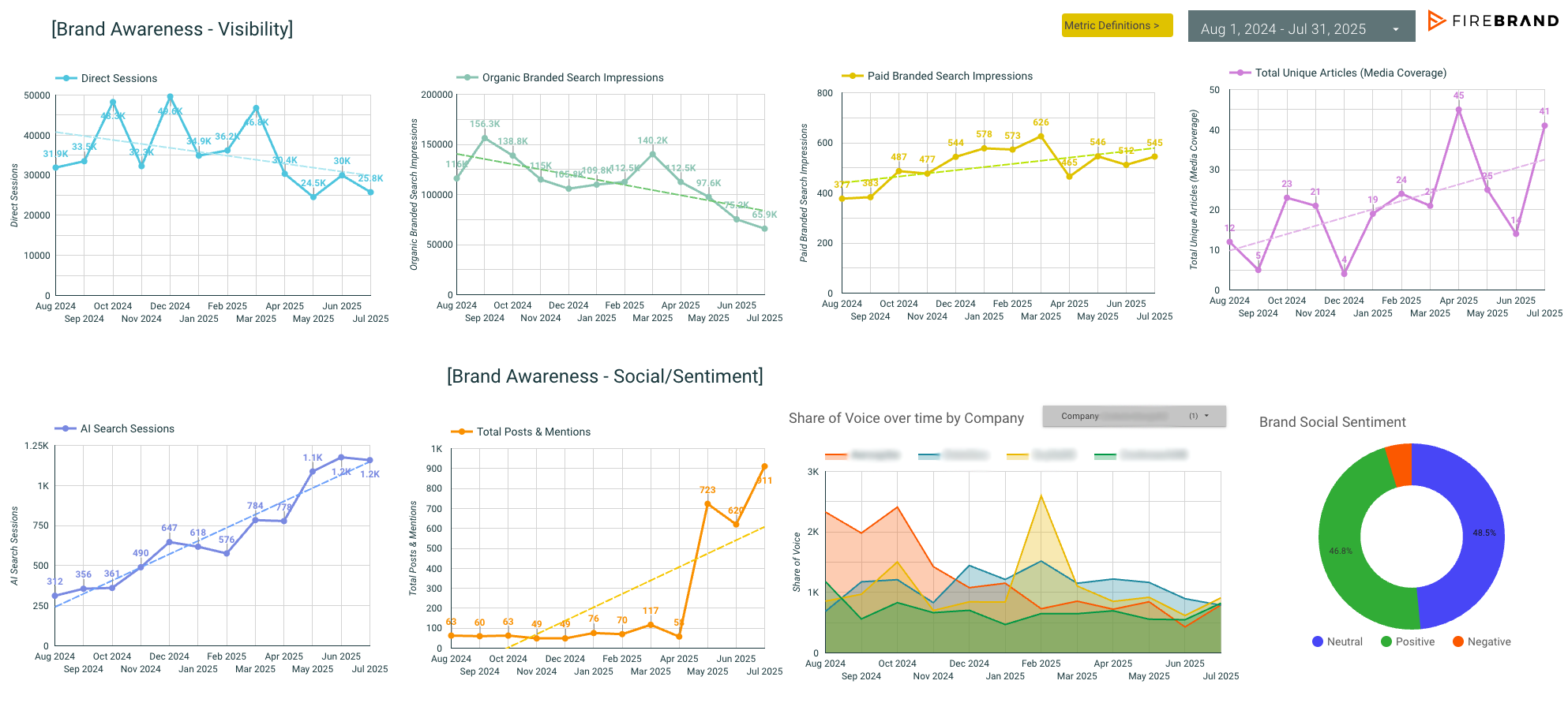
If your entire marketing dashboard is built around website traffic, conversions, and last-click attribution, you’re flying blind in zero-click marketing. Traditional metrics like page views and click-through rates tell you what’s happening on your website, but they completely miss the influence you’re building everywhere else. When 10,000 people see your LinkedIn post, absorb your perspective, and remember your brand without ever clicking, that’s not a failed campaign, that’s successful brand building that your current analytics simply can’t capture.
The new brand measurement framework requires tracking leading indicators of influence rather than lagging indicators of traffic: brand awareness metrics like branded search volume and share of voice in your category; off-site engagement metrics like social reach, video views, and platform-native engagement rates; and AI visibility metrics using tools like Gumshoe AI or Scrunch to track how often your brand appears in AI-generated answers and LLM responses to industry queries.
This doesn’t mean abandoning conversion tracking or ROI measurement. It means recognizing that the buyer’s journey now happens largely outside your website, and the influence you build through zero-click marketing eventually shows up as direct traffic, branded search, and inbound inquiries from people who already know and trust you.
Get on Board with Zero-Click Marketing or Get Left Behind
The beauty of zero-click marketing is that it aligns perfectly with what great marketing has always been about: creating genuine value, building trust, and staying top-of-mind when it matters.
Each tactic in this playbook doesn’t just work in isolation — they multiply each other’s impact. Your GEO-optimized content gets cited in AI answers, which drives branded searches, where your paid ads reinforce your message. Your thought leadership placements get shared in communities where you’re already active. Your videos get discovered on YouTube and repurposed across social platforms where they generate 10x the reach.
This is Multiplier Marketing in action: integrated efforts that create exponential returns rather than linear wins. The click may be dying, but real, measurable, business-driving influence has never been more accessible to brands willing to meet their audience where they actually are.
About the Author

Alastair Nee is Senior Vice President of Digital Marketing at Firebrand, a B2B tech marketing agency based in the San Francisco Bay Area that helps companies grow through creative, data-driven marketing strategy. With a rare left-brain/right-brain approach, Alastair blends sharp analytics with standout creative instincts to build and scale high-performing growth marketing programs that elevate brand profiles and increases their pipeline using the channels and tactics that work best for B2B tech marketing today: GEO/SEO, AI-enhanced paid media, and advanced analytics.
At Firebrand, Alastair leads a team that partners with some of the most innovative names in tech - from AI/ML and data infrastructure to developer tools and B2B SaaS. Over his 17-year career in tech marketing, he has helped launch and grow dozens of companies, delivering award-winning campaigns recognized by The Communicator Awards and other industry benchmarks.
Alastair is a vocal advocate for modern growth marketing and emerging disciplines like AI-powered marketing technology, AI paid media optimization, and Generative Engine Optimization (GEO). His work lives at the intersection of storytelling and performance - where brand meets demand.
Follow Alastair on LinkedIn or explore his thinking on Firebrand’s blog.