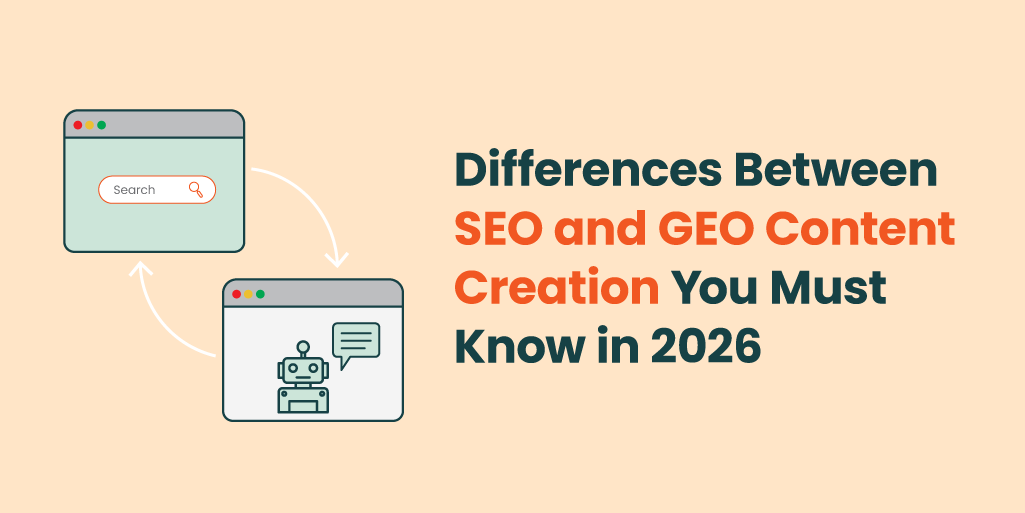
As we kick off 2026 in this new age of Search, digital content creation is no longer a tale of one strategy to rule them all. The traditional playbook of Search Engine Optimization (SEO) has driven discoverability for decades, prioritizing keyword relevance, backlinks, and technical performance to earn rankings on Google’s organic results. But with the accelerating rise of generative AI and large language models, a new complement to SEO has emerged: Generative Engine Optimization (GEO).
Where SEO aims to improve visibility across conventional search engines, GEO focuses on crafting content that LLMs and AI discovery systems understand, trust, and cite in their answers. These two disciplines share foundational principles but diverge in execution, intent signals, and measurement – differences that every marketer must understand to create content in this new hybrid search landscape.
How is GEO Different from SEO?
At a high level, SEO and GEO share the same goal: brand visibility. But the systems and the signals are fundamentally different. Traditional SEO is built for ranking within search engine results pages (SERPs). It optimizes content so crawlers can index it, algorithms can score it, and users can click it. Success is driven by factors such as keyword targeting, backlinks, page experience, and domain authority — all designed to secure a higher position in search results.
GEO, on the other hand, is designed for AI answer generation, not rankings. Generative engines don’t present blue links, they synthesize responses from multiple sources and decide what information to include, how to phrase it, and which brands to mention or cite. This means GEO content must prioritize clarity, factual precision, structured explanations, and semantic completeness so AI models can easily interpret and reuse it.
Another key difference is intent resolution. SEO content often spreads intent across multiple pages to capture long-tail queries and funnel users through a journey. GEO content is optimized to resolve intent within the content itself, anticipating follow-up questions and providing direct, authoritative answers that models can confidently surface without needing the user to click through.
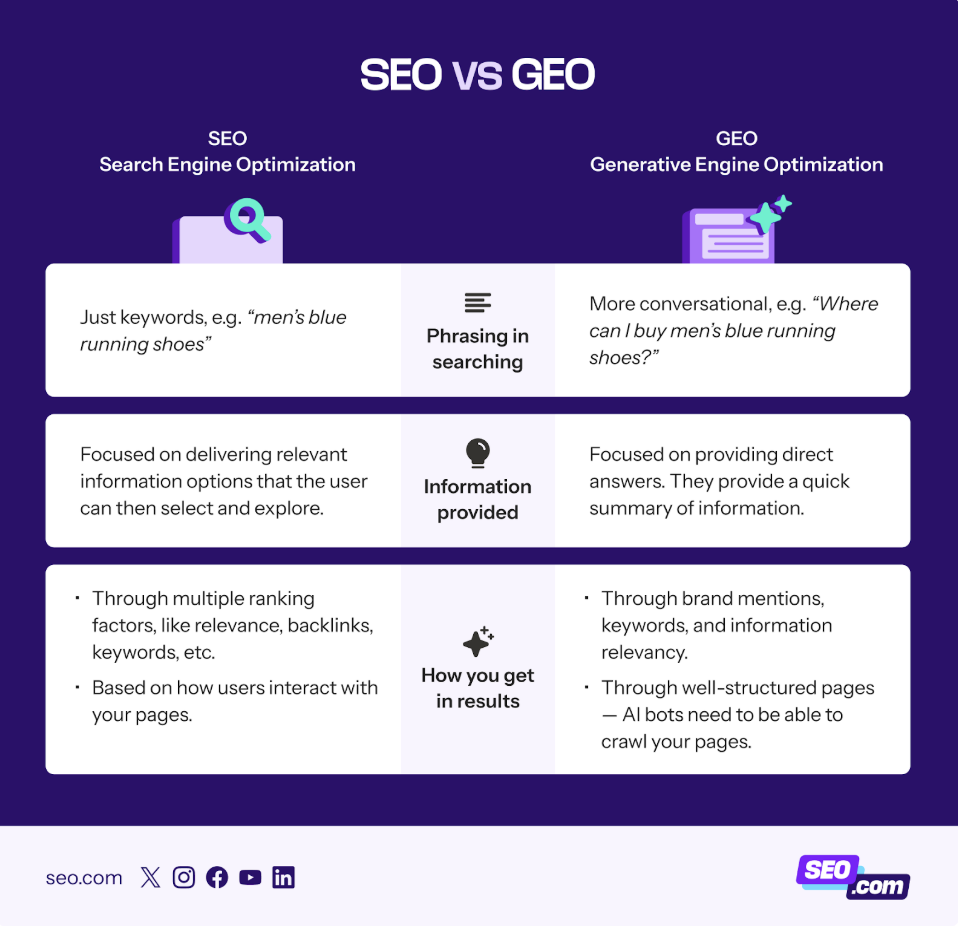
And finally, measurement changes — which have been a puzzle for marketers to figure out when it comes to KPI’s and reporting for AI Search. The nature of SEO vs GEO makes measurement tricky: SEO helps users find your content, GEO helps AI systems reference it. SEO success has been directly tied to measures in rankings, traffic, and conversions. GEO success is measured by AI visibility, which includes brand mentions in AI Overviews, inclusion in model-generated answers, citation frequency, and semantic authority across topics. While most SEO reporting methodologies default to Google Search Console metrics, GEO measurement has been tricky in that different tools report on non-standardized metrics and prompt reporting is synthetic.
Primary SEO vs GEO Differences in Content Creation
Understanding the core differences between SEO and GEO is critical to the success of marketing teams in B2B content creation. As search becomes hybridized between traditional index-based retrieval and generative models that synthesize answers, the way we craft content must evolve accordingly. Below we cover the primary distinctions that matter when you’re creating and optimizing content in this new playing field.
1. Target Output vs Target Input
SEO content creation is traditionally built for search engine crawlers and in turn, structured and optimized to match queries with pages that provide relevant information. Your goal has been to rank your page as high as possible for a set of relevant keywords.
GEO content creation, on the other hand, is built for AI models that rely on semantic patterns rather than exact keyword matches. The objective isn’t just to rank and be mentioned, it’s to be referenced or summarized in generative responses. This shifts the focus from optimizing for organic positions to optimizing for semantic clarity, perceived subject authority, and factual completeness.
2. Keyword Focus vs Intent Mapping
In SEO, keyword research drives headline creation, on-page optimization, and metadata signals. You think in terms of sets of keywords and variants you want to rank for.
In GEO, the focus moves toward intent categories, question taxonomies, and concept clusters. This ensures your content covers not only the primary question but also common follow-ups and contextual nuances. Generative models reward depth and structure, not just keyword density.
3. Backlinks vs Source Authority Anchors
Off-page SEO (backlinks and domain authority) remains a pillar of traditional search because they signal trust to engines like Google.
GEO relies on source authority anchors. These may include in-content citations, expert quotes, structured data, tables of evidence, first-party data, or reference links from acknowledged authorities. This means contextual trust signals become equally important as link equity.
4. Page Layout vs Information Architecture
SEO gains often come from optimizing page layout in the form of headings, keyword placement, internal links, and snippet opportunities. GEO content design emphasizes information architecture that mirrors how models parse and relate concepts: clear definitions, schema, and well-labeled sections that map directly to likely user intents.
This doesn’t mean ignoring SEO layout best practices. For GEO, the shift is to design pages around intent resolution, not just visual hierarchy. That means leading with explicit definitions, grouping related concepts, using FAQs to capture follow-up questions, and applying schema where possible so AI systems can clearly identify entities and relationships.
5. Clickthrough Metrics vs Answer Inclusion Metrics
Traditional SEO success has, through the years, been measured in rankings, clicks, and conversions.
With that said, GEO has impacted traditional search metrics and spun up a trend of zero-click behavior. In the context of GEO, new metrics like answer inclusion rate, AI citations, AI mentions, and generative visibility begin to matter. You may see traffic patterns shift even more as users get answers directly from models, but the brand influence still accrues when your content forms the basis of those answers.
If all of this feels like a lot to absorb, you’re not alone. SEO optimized content already has enough moving parts, and now GEO adds a whole new layer of complexity to how content gets discovered and used. The good news? You don’t need to choose one or relearn everything from scratch. At its core, this shift is simply about writing clearer, more trustworthy content that humans appreciate and AI systems can confidently understand and reuse. Master that, and the rest starts to fall into place.
Best Practices for Integrating GEO with Existing SEO Strategies in Content Creation
If all of this feels like a lot, take a breath. In fact, the strongest content strategies in 2026 treat GEO as an extension of SEO — not a replacement. Even in 2026, a majority of users are still starting search queries with traditional search. The key is knowing where to adapt your approach so your content performs and is positioned well for both SEO and GEO.
The most effective content strategies today are built on fundamentally treating GEO vs SEO as complementary layers of optimization instead of competing ones. Below are our expert-recommended best practices integrating GEO with SEO strategies:
1. Build on Strong SEO Fundamentals First
Before layering in GEO optimization, ensure your content adheres to traditional SEO best practices: targeted keyword research, clean metadata, organized site structure, internal linking, and technical performance. These fundamentals remain relevant because search engines still index and serve your pages in classic search results, even as generative engines evolve.
Once you’ve identified a primary topic for content, shift your mindset from “How do I rank for this?” to “How do I fully answer this?” Generative models favor content that resolves intent clearly and completely, so expand beyond surface-level explanations and make sure your page can stand on its own as an authoritative reference.
2. Structure Content for AI Interpretability
SEO content creation has trained us to write for skimmers: short paragraphs, optimized headings, and internal links. GEO adds another layer of machine readability. As mentioned, rely on semantics, context, and structure to decide what to include in answers. To account for this and optimize for AI search, you should:
- Use clear, descriptive headings and subheadings
- Break content into concise sections with labeled intent
- Provide executive summaries and key takeaways
This helps AI systems parse meaning more effectively and increases the chance your content becomes a trusted source in synthesized responses.
Let’s take a look at a clear example of structuring content for AI interpretability together in practice using ScyllaDB’s Technical Glossary pages. The Cassandra Lightweight Transactions (LWT) glossary term page opens with a clear, explicit definition that immediately explains what LWTs are and how they work, satisfying the primary user intent without forcing readers (or AI models) to infer meaning from surrounding context.
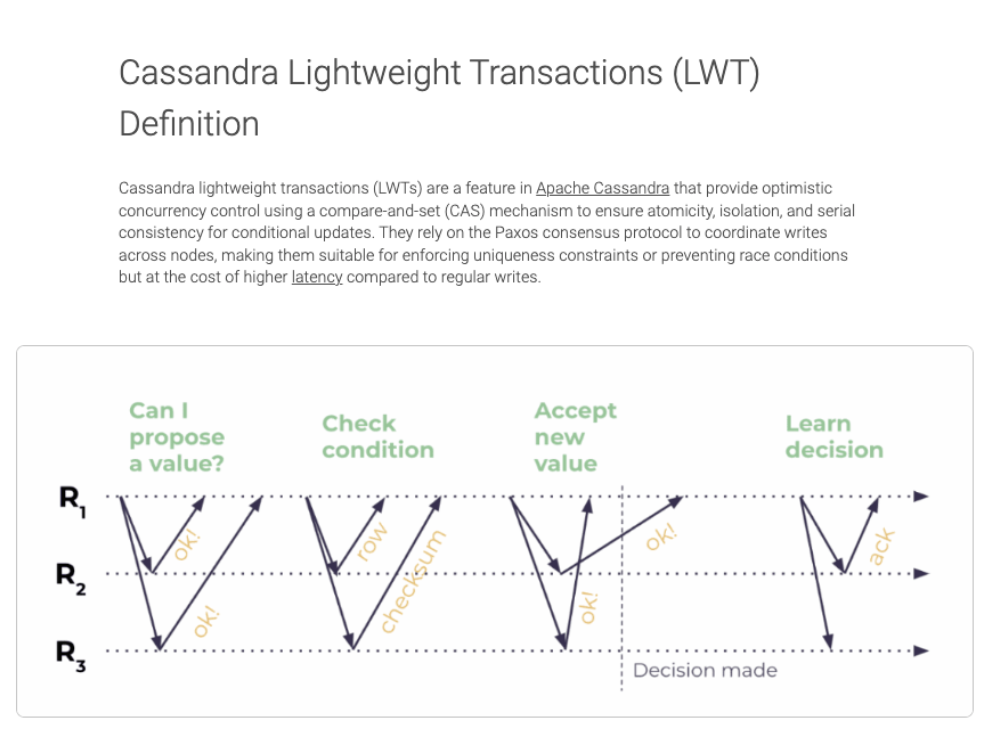
From there, the content is broken into clearly labeled sections and concise FAQ-style questions that address common follow-ups, such as how LWTs behave, when they’re used, and what tradeoffs they introduce. This structure makes it easy for generative engines to understand the concept, map related questions, and reuse specific answers in AI-generated responses. In addition, the structure is particularly effective for winning AI Overviews due to positive semantic organization that presents content as directly answerable.
3. Add and Optimize FAQs With Structured Data
One of the most powerful tactics for SEO and GEO is including FAQ sections to your content marked up with schema (FAQPage structured data). Adding this to content anticipates follow-up questions conversational AI users will ask.
Adding FAQs to SEO optimized content helps generative models understand:
- Common follow-up questions related to the main topic
- Clear answers they can extract verbatim
- How concepts relate to one another within a page
From an SEO perspective, FAQs also support rich results and long-tail keyword coverage. From a GEO perspective, they increase the likelihood that your content is used as source material in AI-generated responses. When possible, pair FAQs with structured data to reinforce clarity and trust.
Here is an example of FAQs in practice with the ScyllaDB Product Overview page. This page, which was previously SEO-optimized, now has FAQ answers to common questions about the product, like how it differs from other NoSQL databases and what use cases it supports. Each question has a clear, direct answer, making it easy for both humans and AI systems to understand.
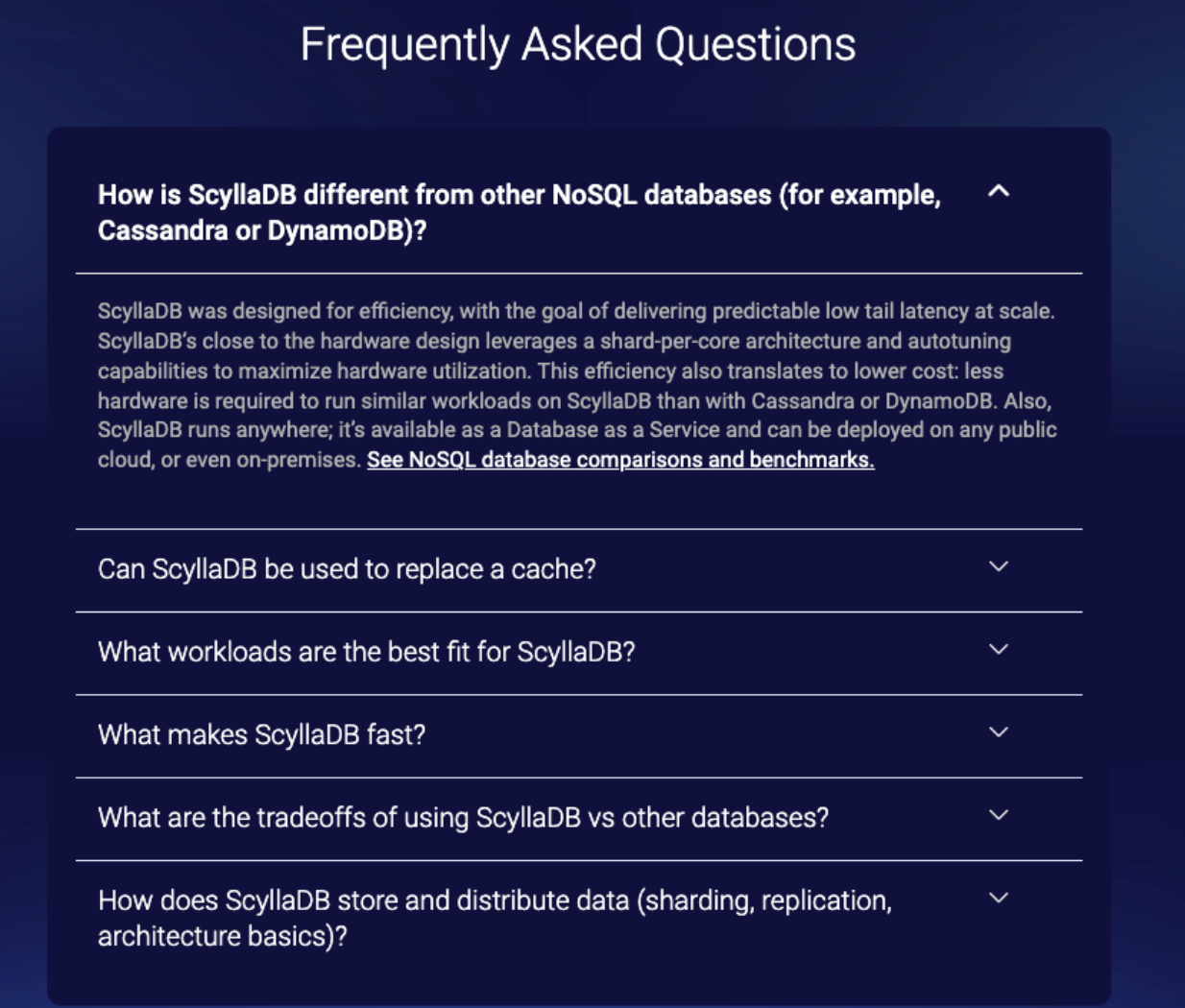
By breaking information into discrete, well-labeled Q&A blocks, the page allows LLMs to extract precise answers, positioning content more effectively for mention or citation in AI-generated outputs. Adding structured FAQs to product or service pages ensures content is not only human-friendly but also AI-ready, giving your brand visibility in both traditional search and emerging AI-powered answer systems.
4. Use Schema Markup Beyond FAQs for GEO and SEO
While structured FAQs are a great starting point, schema markup can and should go far beyond just question-and-answer sections. Content that defines concepts, processes or products can benefit from clearly signaling its structure to both search engines and AI systems. Schema essentially acts as a “map” for machines, helping them understand what each piece of content represents and how it relates to the topic as a whole.
A generic example of Product schema in the source code of a page looks like this:
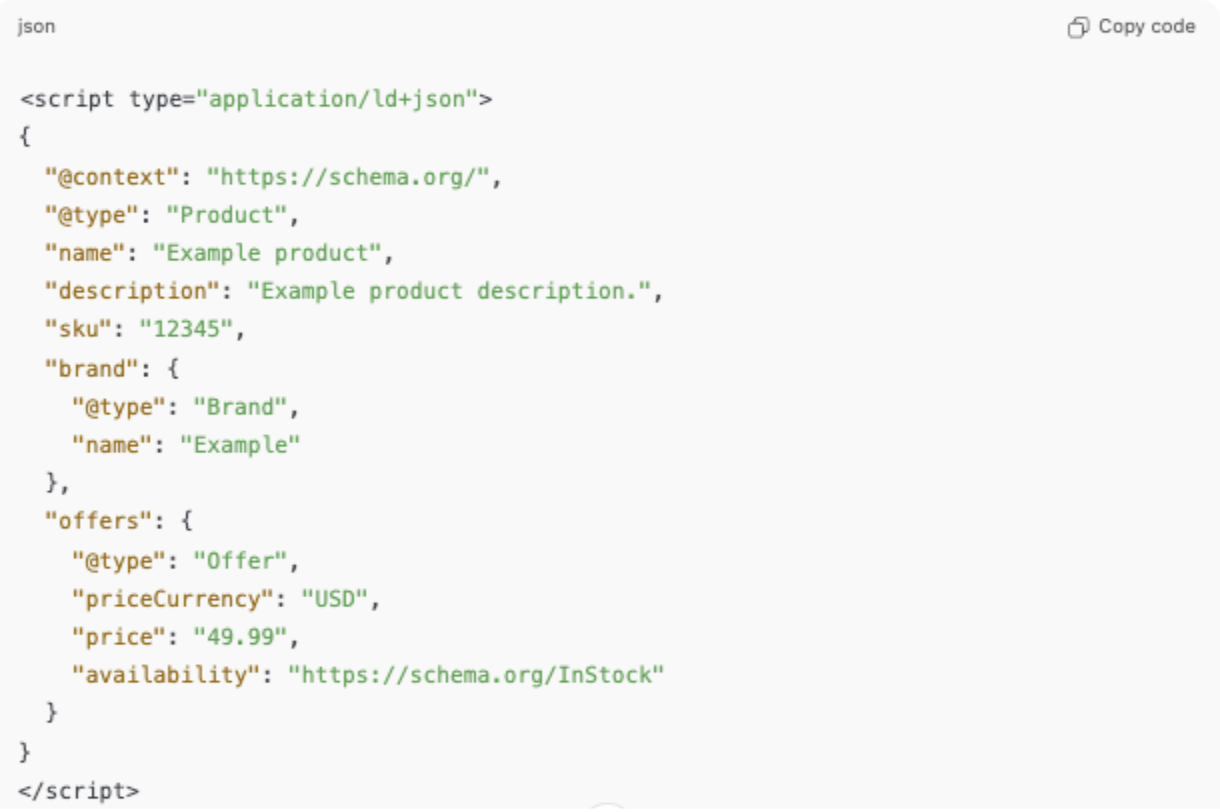
This type of markup is especially valuable for LLMs because it explicitly defines entities and attributes. Product schema helps AI systems understand what the entity is, its properties, and relationships. This makes it far more likely that your content will be extracted, summarized, or cited correctly in AI-generated outputs. In addition, implementing schema improves SEO by making your pages eligible for rich results, such as product details and ratings, giving your content dual visibility in both traditional search and generative AI systems. Extending schema implementation beyond FAQs turns every structured element of your page into a signal that both humans and machines can trust and use.
5. Embrace Semantic Depth Over Keyword Coverage
Traditional SEO often emphasizes keyword density and placement. GEO favors semantic comprehensiveness: covering a topic thoroughly and in ways that mirror natural language patterns and user intents. Without having to reinvent the wheel of already SEO optimized content, evaluate and rework copy to:
- Cover related entities and concepts
- Answer implied questions within a topic
- Use natural, conversational phrasing that aligns with how users ask AI systems questions
Focusing on semantic depth means going beyond chasing keywords. By fully covering a topic and anticipating related questions, your content becomes more valuable to readers and more “understandable” to AI systems. We like to think two birds one stone to increase the chances content will be cited in AI Overviews while still performing well in traditional SEO.
6. Implement GEO Measurement in Your Search Reporting
Welcome to the wild west of search: AI search reporting, where methods and tools are evolving almost daily. Although there are no “silver bullet metrics” such as traditional impressions and clicks from Google Search Console, there are some ways to see through the fog. The key is to find tools for GEO where you need to measure how often your content is referenced or surfaced in AI systems.
Although rapidly evolving, we have honed in on several GEO-focused metrics: AI citation frequency through mentions and citations, share of voice or brand mention rate, and inclusion in AI Overviews. These metrics tell you whether your content is actually being used as source material in generative responses, not just indexed or clicked.
Tools like Gumshoe AI and Scrunch can help you monitor this type of AI visibility. Gumshoe tracks brand visibility and mentions across AI-generated search and answer experiences. Scrunch allows you to simulate prompts and see how your content might be surfaced in AI responses:
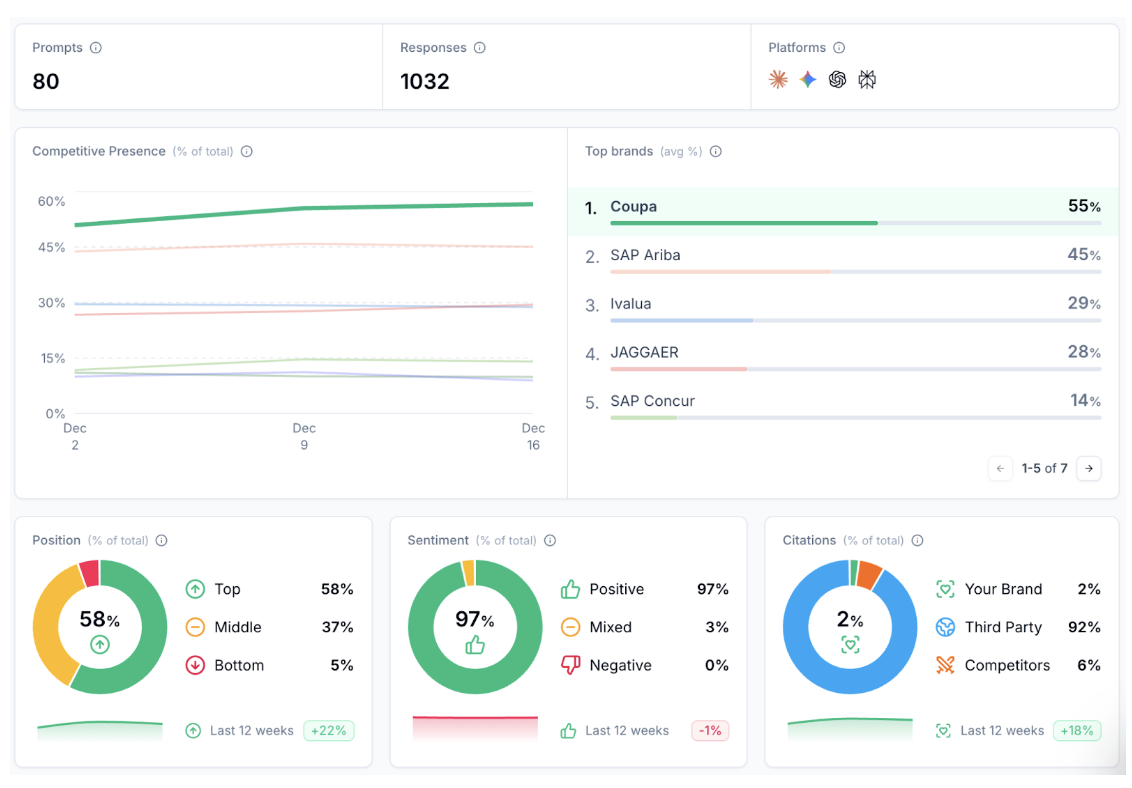
It’s important to note that prompt-based reporting is synthetic — it simulates how AI systems could surface content based on model behavior and known queries, rather than capturing real-time usage inside proprietary LLMs. This means the results are directional, showing potential influence rather than definitive exposure.
By combining traditional SEO metrics with these tangible GEO measurement, you get a complete picture of your content’s reach, measuring both human engagement and AI-driven influence. Regularly reviewing these signals allows you to refine content for better performance in both search engines and generative AI systems.
Expert Support to Help You with SEO and GEO
Firebrand’s expert growth marketing team can help you create, position and optimize your content for both traditional search and AI visibility. Our team offers full-scale GEO and SEO services to help your company get ahead of the curve in today’s evolving search landscape. Simply reach out for more information based on your business-specific needs. We’re here to help you improve your Reddit marketing strategy and crush your marketing goals!
Also, don’t forget to check out our GEO and SEO predictions for 2026!
About the Author

Arman Khayyat is a Bay Area–based senior digital marketing leader and Account Supervisor at Firebrand, where he helps B2B startups and scaleups accelerate growth through performance-driven programs. He leads client programs across PPC, SEO, and marketing analytics—helping high-growth startups and enterprise tech brands scale efficiently. His expertise spans everything from paid search architecture and technical SEO audits to funnel analytics and conversion optimization.
Prior to joining Firebrand, Arman held digital marketing leadership roles at B2B technology firms and agencies, bringing over a decade of experience in growth marketing and performance media. Arman frequently writes about B2B lead generation, search strategy, and the evolving role of LLMs and Generative Engine Optimization (GEO) in discoverability. Passionate about the evolving search landscape, he’s currently exploring the impact of LLMs and Generative Engine Optimization (GEO) on organic discoverability.
Outside of work, you’ll find him experimenting with AI tools, perfecting his espresso technique, or watching is favorite sports teams.
Follow Arman on LinkedIn or explore more on Firebrand’s blog.