Marketers have responded to this shift with strategies and optimization tactics designed to drive brand visibility in these new generative engine-powered search tools — a new area of marketing we call Generative Engine Optimization (GEO). Others call it AIO or AEO, but GEO more clearly represents the shift from optimizing for indexed content to optimizing for machine-generated responses. Learn more about why GEO best fits this approach.
Although designed for organic search based tools, GEO is not a replacement for SEO. Effective GEO fits into a broader cross-functional strategy including SEO, content marketing, PR and social media, all designed to drive brand visibility in AI search results. This team sport approach provides a broad span of influence across the signals that LLMs rely on. SEO, content marketing, PR, and social media all contribute critical data that large language models consume to generate their responses. When these functions operate in unison, it multiplies brand visibility opportunities.
Core elements of a modern GEO strategy include structured on-site content, citation generation (through, PR coverage, content placement, affiliate marketing, social signals e.g. Reddit), and model-friendly technical optimizations. It’s broader, and more cross-functional, than traditional SEO programs.
Below we outline best practices for integrating GEO across every channel, and how combining them turns marketing organizations into GEO Super Hero Teams.
Why is GEO Important for Marketing Teams?
We are officially in a dual-search world: Traditional search engines (Google, Bing) and AI-based answer engines (ChatGPT, Perplexity, Gemini, CoPilot, etc). These platforms operate differently and reward domains with mentions and citations based on a differing set of online authority signals. As covered in our guide on How to Rank in AI Overviews, GEO requires strong topic authority, structured information, and a broad mix of trusted external references, beyond what SEO alone typically manages.
When cross-functional marketing teams operate together under a unified GEO strategy, visibility in AI search accelerates. Below we will break down how each discipline can integrate GEO tactics that contribute to a larger unified generative engine optimization strategy.
SEO and GEO
SEO remains the foundation of GEO because both search engines and LLMs rely on structured, trustworthy, and authoritative content to understand a brand’s expertise. Traditional SEO signals, like clarity, organization, and depth still matter, but GEO pushes beyond rankings by prioritizing how completely and accurately you answer a topic. It also incorporates broader cross-channel reputation signals, allowing generative engines to evaluate not just what you publish, but how the entire ecosystem – and real-world users or customers – recognizes and reinforces your authority.
SEO and GEO Best Practices
- Build topic clusters and FAQ lists to support AI summarization (see: Importance of FAQs on Your Website).
- Identify and craft SEO/GEO specific content to show topical authority in concepts related to your product or service (see content marketing section below).
- Use schema markup, structured content, and clear definitions to help LLMs understand your expertise.
- Strengthen internal linking to demonstrate topic authority.
- Ensure site content answers the generative question directly because LLMs reward clarity and completeness.
SEO and GEO strategies are most effective when tightly aligned.
Content Marketing and GEO
Content is the fuel that powers both SEO and GEO, but the search engines operate differently, and they consume information differently. Traditional SEO rewards keyword relevance, structure, and backlinks. Generative engines reward completeness, clarity, authority, and depth. LLMs aren’t ranking documents; they’re synthesizing information to answer questions. They pull from multiple sources, summarize patterns, and infer relationships.
This means your content must do more than match queries, it must teach the model about your brand and teach both humans and LLMs about concepts you are knowledgeable about.
Content Marketing and GEO Best Practices
- Create “LLM-ready” content using FAQs, comparisons, listicles, checklists, and case studies.
- Include cross-channel references to PR coverage, customer stories, and expert commentary.
- Publish original insights or data that LLMs may cite or summarize.
- Use modular sections to help generative engines parse content.
- Maintain consistent terminology as LLMs reward clarity (example: Use your boilerplate messaging to craft summary sections in blogs that tie your product or service to the subject matter of that blog).
Well-structured content is one of the most influential factors in generative engine optimization.
PR and GEO
Public relations is one of GEO’s most powerful allies because LLMs heavily weigh third-party sources, expert commentary, and reputable citations when choosing which domains to mention and cite. Earned media, thought leadership, influencer content and analyst mentions help generative engines distinguish between a brand that simply publishes content and a brand recognized by others as an authority.
In GEO, PR becomes the external validation layer that increases how often your brand is referenced, cited, or recommended in AI-generated results. Recency and topical timing matter too. LLMs tend to favor the most recent version of an article that matches a user query as opposed to one that has an older publication date.

PR and GEO Best Practices
- Prioritize earned media that strengthens the brand’s topic authority.
- Use AI-optimized press releases (see: AI Press Release Optimization).
- Ensure messaging is consistent across all spokespeople and announcements.
- Build PR campaigns around category ownership, not just brand announcements.
- Monitor listicles, “top tools,” or “best companies” articles; these often influence AI recommendations.
For an effective GEO strategy, PR is not optional. It’s a highly influential ranking factor. Drive deeper into aligning PR and GEO for maximum AI visibility.
Social Media and GEO
While social signals don’t directly influence traditional SERP rankings, they do play an important role in GEO by helping LLMs interpret a brand’s real-time popularity, sentiment, and perceived authority. Consistent engagement, expert commentary, and topic-focused conversations across social platforms create behavioral signals that generative engines use to understand which brands are active, relevant, and trusted within their categories.
Social Media and GEO Best Practices
- Post expert content that reinforces topical authority.
- Enlist thought leaders to post about your brand or product (B2B Influencer Marketing)
- Focus on platforms LLMs frequently crawl: LinkedIn, Reddit, Quora, X.
- Encourage employees and SMEs to publish thought leadership.
- Repurpose content into formats that reinforce clarity: carousels, threads, explainers.
- Identify trending questions for new FAQ content.
Social media acts as a real-time reinforcement layer for your GEO strategy.
>> Affiliate marketing also plays a small but meaningful role in GEO, with affiliate-style sites like Forbes Advisor, NerdWallet, and even platforms like G2 often appearing in LLM-generated citations. While it currently represents only a small percentage of AI references (~2%) these high-authority review and comparison sources can still influence how generative engines perceive and recommend brands.
How SEO, Content Marketing, PR, and Social Media Work Together Under a Unified GEO Strategy
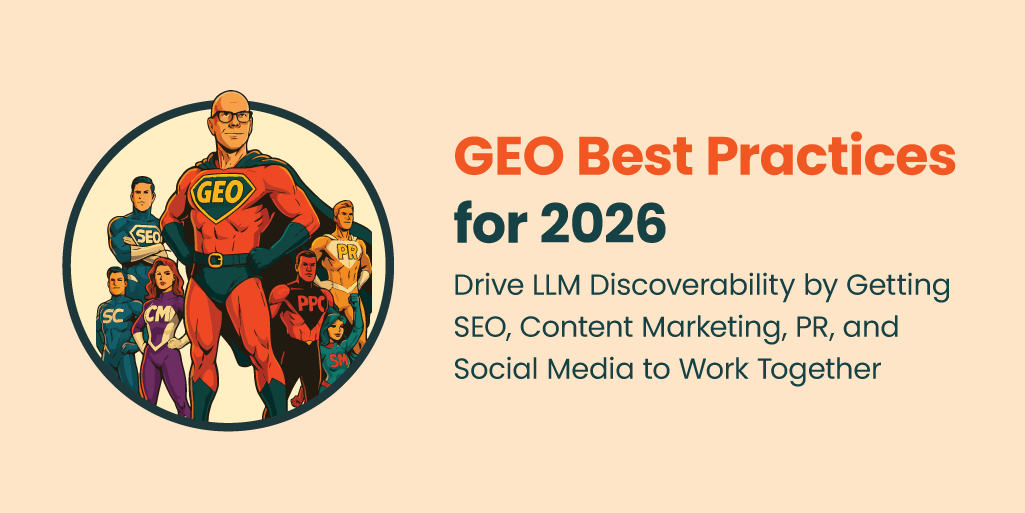
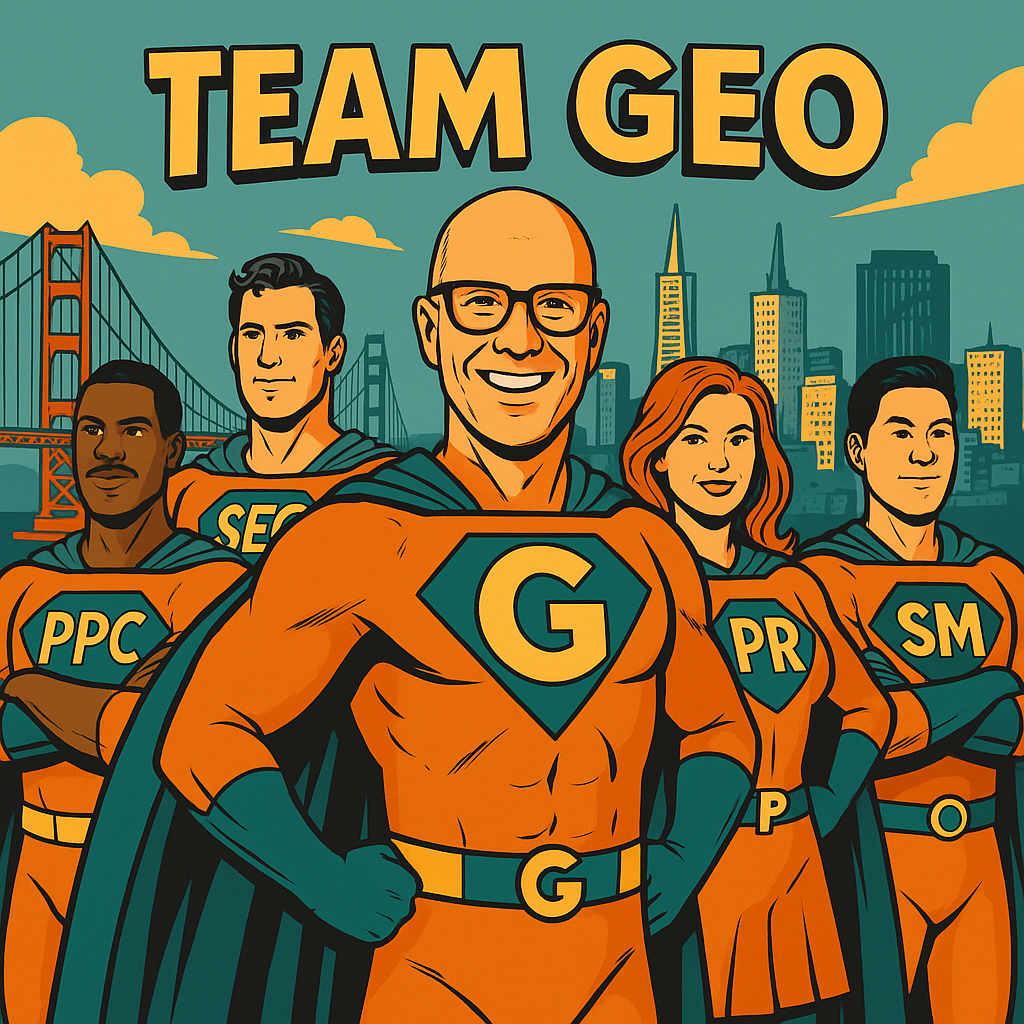
A unified GEO strategy works like a superhero team. Each channel brings its own unique strengths, and when combined, they create a far more powerful force than any one discipline alone. SEO, content marketing, PR, social media, and paid media amplify each other’s signals, making brands exponentially more discoverable across both traditional and AI-driven search.
Cross-Functional Marketing and GEO Best Practices
- SEO creates authoritative, structured, evergreen answers.
- Content deepens expertise and provides model-friendly material.
- PR supplies third-party validation and citations.
- Social amplifies signals and provides real-time topic momentum.
- PPC & Syndication fill visibility gaps and reinforce brand mentions.
- Get more best practices on boosting brand visibility in AI search results.
Together, they strengthen your LLM visibility across every stage of discovery. The organizations that embrace a unified GEO approach will create the strongest opportunities for AI visibility in 2026 and beyond.
GEO Best Practices for 2026 FAQs
1. What are the most important best practices for Generative Engine Optimization in 2026?
The most effective GEO strategies focus on structured content, consistent topic authority, PR-driven credibility, social reinforcement, and cross-channel alignment. Together, these practices help LLMs understand, trust, and reference your brand across AI search experiences.
2. How do SEO and GEO strategies work together for better results?
SEO builds the foundational structure, like clarity, organization, and authoritative pages, while GEO extends that structure into LLM environments by adding completeness, citations, and broader ecosystem signals. When SEO and GEO are intentionally integrated, they reinforce each other and increase your brand visibility in both traditional and AI-based search.
3. What are the differences between GEO and traditional content marketing best practices?
Traditional content marketing focuses on narratives, engagement, and keyword alignment, while GEO requires more structured, model-friendly formats like definitions, comparisons, FAQs, and original insights. GEO content should clearly teach and inform generative engines, not just entertain or rank in organic SERPs.
4. How does PR contribute to Generative Engine Optimization best practices?
PR strengthens GEO by providing the external validation signals, citations, expert commentary, third-party articles, and earned media, that LLMs rely on to judge authority. These external references help generative engines recognize your brand as credible, increasing the likelihood of being surfaced or cited in AI-generated responses.
5. What tools or methods help measure GEO performance effectively?
Firebrand’s framework provides practical baselines, competitor insights, citation rankings, and actionable visibility data aligned with real-world AI search behavior. These measurement methods help teams track progress and validate whether best practices for GEO are improving discovery.
About the Author

Shane Jordan is a San Francisco-based digital marketing pro with a passion for driving brand growth. At Firebrand, Shane focuses on client growth strategies including SEO & Generative Engine Optimization (GEO), PPC, organic & paid social media, Influencer marketing and performance analytics. He writes practical guides on digital marketing topics including SEO Best Practices, PPC Landing Pages, Multiplier Marketing, and Measuring AI Web Traffic.
With a seasoned background and a passion for emerging tech, Shane helps brands navigate the future of marketing. Outside of work, he enjoys coastal hikes with his family and piloting small aircraft.
Follow Shane on LinkedIn or explore more on Firebrand’s startup marketing agency blog.