Updated on 01/13/2026
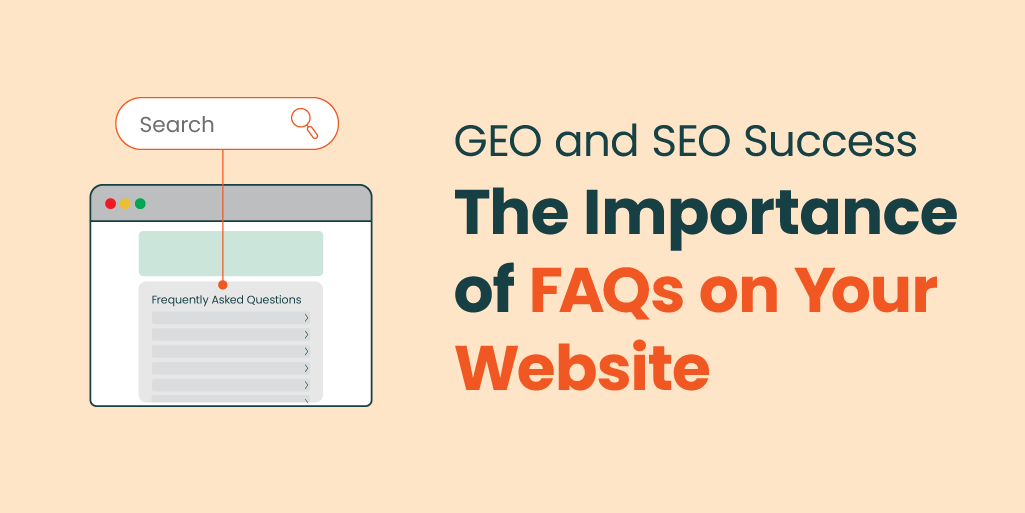
Think of FAQs as the Swiss Army knife of your product pages — small, unassuming, but absurdly useful. Not only do they answer customer questions before they even have to click Contact Us, they also make search engines and generative AI tools think, “Ah, this site really knows its stuff.”
In a world where Google isn’t the only search game in town anymore, FAQs can be your ticket to more visibility, better rankings, and even a starring role in AI-generated answers.
Benefits of FAQs: Why FAQs Are a Power Move for Product Pages
The Rise of Generative Engine Optimization (GEO)
Generative Engine Optimization (GEO) is the art of making sure AI-powered search tools (think Google AI Overviews, ChatGPT, or Perplexity) see your content and happily use it in their answers.
Here’s the thing: these AI engines love structured, clear, to-the-point answers. FAQs are basically their favorite snack. By anticipating questions your customers ask and providing direct, accurate responses, you increase the odds of your brand getting cited in those auto-generated “summaries” people are now reading instead of scrolling through ten blue links.
The SEO Benefits You Can’t Ignore
Of course, good old SEO is still very much alive, and FAQs are an underused way to give it a boost. Add FAQ schema markup and you might get those coveted rich snippets in Google search results. Provide quick, useful answers and you keep visitors on the page longer, which search engines take as a good sign.
Plus, FAQs give you an excuse to target those long-tail, conversational queries (“Does this API integrate with Salesforce?”) that your main copy might not naturally fit.
Best Practices for Writing FAQs
Keep It Customer-Centric
Your FAQ should be like your best customer service rep: friendly, knowledgeable, and never making you feel like you asked a dumb question. Pull real questions from sources like sales calls and support tickets, the ones you hear again and again.
And please, no jargon-laden, corporate-speak answers. Your customers are humans, not compliance auditors.
Target Search Intent (Both GEO + SEO
AI tools and search engines alike feast on intent-based questions: how, what, why, who and where. Writing answers with these in mind makes your FAQs more discoverable and more likely to show up in AI-generated overviews.
Think of it like writing an elevator pitch: Short, sharp, and irresistible.
Leverage FAQ Schema Markup
Without structured data, your FAQs are just… text. With FAQ schema markup, they become search engine gold. Schema makes it easier for both Google and AI tools to understand your content’s purpose, increasing the odds you get featured in results, or even read aloud by a virtual assistant (bonus: no one can hear your site’s awkward loading pauses).
How to Add FAQs for GEO and SEO Impact
1. Research Your Question
Don’t just guess what people want to know. Pull questions from:
- Customer service logs
- Google’s People Also Ask section
- Competitor product pages
- AI prompt simulations (ask ChatGPT what questions it thinks people might ask about your product)
2. Write Concise, Clear Answers
Aim for one to 3-5 sentences that directly answer the question. You can always elaborate below if you have more detail to share. Remember: if it takes longer to read your answer than it does to boil pasta, it’s too long.
3. Optimize for Both Humans and Machine
Strike the balance between keyword-rich and conversational. Sprinkle in keywords naturally, but keep the tone human. Nobody wants to read: “Our cloud backup software is the best cloud backup software for cloud backup use cases.
4. Implement FAQ Schema Markup
Use tools like Yoast if you’re on WordPress, or JSON-LD if you want to get hands-on. Schema isn’t sexy, but it’s the quiet hero that helps your content shine in both traditional and AI-driven search.
Measuring the Results
Track your progress in Google Search Console, specifically impressions and clicks for FAQ-rich queries. Keep an eye on your rankings for long-tail technical questions, and test those same queries in generative search tools to see if your brand is showing up in the AI answer set.
Also, monitor engagement: if visitors scroll straight to your FAQ section and spend time there, that’s a win. If they bounce immediately after reading… well, maybe it’s time to tighten your answers (and no, adding “powered by AI” at the end doesn’t count as an improvement).
Unleash The Power of FAQs
FAQs aren’t just filler content at the bottom of your product pages. They’re a strategic weapon for both today’s SEO and tomorrow’s AI-powered search.
So next time you update your product page, ask yourself: What questions would my ideal customer search for or ask an AI about this product? Then answer them better than anyone else. Do it right, and you won’t just rank. You might even become the answer.
Find out more about GEO and ways to boost brand visibility so you can be a player in the GEO-game. Want to take it a step further? Read about our Generative Engine Optimization Services.
People also ask this about FAQs for GEO & SEO on Your Website
Why are FAQs important for both SEO and Generative Engine Optimization (GEO)?
FAQs help search engines and AI models clearly understand your content by pairing explicit questions with concise, authoritative answers. This structure improves keyword coverage for SEO while increasing the likelihood your content is cited or summarized accurately by AI systems used in generative search experiences.
How do FAQs help my website appear in AI-generated search results?
AI models favor content that directly answers user questions. Well-written FAQs (including the example you are now reading) mirror how people ask questions in AI tools like ChatGPT, Gemini, and Perplexity, making your content easier for these systems to extract, reference, and surface in responses.
Do FAQs still matter if my site already ranks well in Google?
Yes. Even high-ranking pages can lose visibility as AI-powered search reduces traditional clicks. FAQs help protect and extend visibility by enabling your content to appear in featured snippets, People Also Ask results, and AI-generated answers, not just classic blue-link rankings.
How many FAQs should I include on a page for SEO and GEO impact?
Quality matters more than quantity. Most pages benefit from 3–6 highly relevant FAQs that reflect real user questions. Each FAQ should address a specific intent, avoid redundancy, and provide clear, standalone answers that AI systems can easily parse.
Should FAQs be added to every blog post and service page?
Not automatically, but strategically. FAQs are most effective on high-value pages where users have clear questions, such as blog posts, product pages, service pages, and pillar content. When aligned with search intent, FAQs improve engagement, clarity, and discoverability across both SEO and AI-driven channels.
About the Author

Yasaman Sadeghi
Yasaman Sadeghi is a senior account executive on Firebrand’s digital marketing team, with a focus on SEO, PPC, and social media. She’s always looking to learn the latest developments in digital marketing strategies and strives to provide the best results for her clients.